Finance / Cnbc
Curated signals and summaries. Topic: Cnbc. Updated briefs and structured summaries from curated sources.
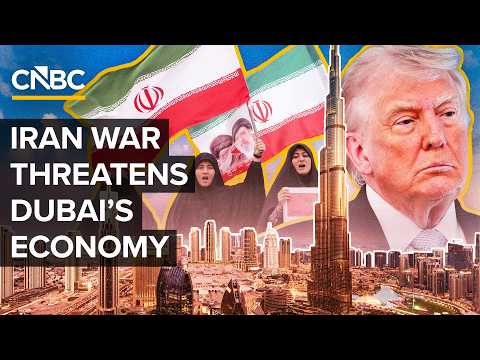
How Trump’s Iran War Is Threatening Dubai’s Reputation As A Safe Haven
Summary
The conflict with Iran will impact every sector in the United Arab Emirates and its vision as a safe haven.
Instruments
Timeline highlights
00:00–05:00
- The conflict with Iran will impact every sector in the United Arab Emirates and its vision as a safe haven.
- The longer the conflict continues, the more structural damage it does to Dubai's positioning as the world's preferred transit hub.
- Shipping volumes through the Strait of Hormuz have fallen to a fraction of pre-war levels, significantly affecting Dubai's role as a re-export hub.
- The UAE's twin stock markets have seen about $120 billion in value evaporated, with the Dubai financial market plunging about 16% in the first month of the war.
- The Iranian attacks have specifically targeted critical energy infrastructure, leading to a 30% increase in fuel prices in the Emirates.
05:00–10:00
- There is a serious questioning as to the extent to which the U.S. security umbrella is a net asset or net liability for the Gulf states.
- The Iranian regime has targeted the United Arab Emirates because they say the United States is using this space as a launch pad in the war against Iran.
- This conflict between the United States, Israel, and Iran is likely to really cement the security relationship between the United States and the United Arab Emirates.
- The United States and the United Arab Emirates are lockstep in their goals in this war, one of which is making sure that Iran does not have the ability to attack America's allies in the Gulf.

Why AI Chips Made In The U.S. Are Being Sent To Taiwan — Creating A Major Bottleneck
Summary
TSMC sends almost every chip made in the US back to Taiwan for packaging.
Instruments
Timeline highlights
00:00–05:00
- TSMC sends almost every chip made in the US back to Taiwan for packaging.
- Advanced packaging is now as important as the die itself in chipmaking.
- Nvidia has reserved the majority of TSMC's leading co-os packaging technology.
- Intel is doing some advanced packaging in the US now, in New Mexico and Arizona.
- Chips have gotten exponentially more complex in the age of AI, leading to the evolution of standard packaging into advanced packaging.
05:00–10:00
- Companies like Intel are investing in glass substrates because it enables better control and finer features for the growing systems needed for AI.
- Nvidia has reportedly reserved the majority of COAS L capacity, which has everyone worried due to high demand.
- Intel's 2.5D packaging called EMib allows high bandwidth memory to communicate with the logic chip using a silicon bridge within the substrate.
- Samsung calls its 3D packaging technology X-Cube, while Intel's is Foveros Direct and TSMC's is SOIC.
10:00–15:00
- The vast majority of advanced packaging happens in Asia, with TSMC handling 100% of its packaging in Taiwan.
- TSMC is building its first two US packaging facilities to add high volume packaging capacity near its chips made in Arizona.
- Intel completes certain portions of EMIB and Foveros entirely in the US, while the majority of its final packaging assembly occurs in China, Vietnam, and Malaysia.
- The world's largest OSAT ASE sees advanced packaging sales doubling in 2026 and is building a new COOS site in Taiwan.

Why Home Buyers And Sellers Are Exiting The Market
Summary
Buyers are more concerned about the economy and mortgage rates than they are about home prices, with just 9% of agents reporting home prices as the top concern for buyers.
Instruments
Timeline highlights
00:00–05:00
- Buyers are more concerned about the economy and mortgage rates than they are about home prices, with just 9% of agents reporting home prices as the top concern for buyers.
- Affordability is playing heavily into why more buyers are leaving the market, with 19% of agents reporting this compared to 11% at the end of last year.
- As buyer demand drops, homes are sitting on the market longer, with 31% of agents reporting listings on the market for more than six weeks.
- Sellers are now more worried about wait time, with nearly half of agents at the end of last year saying prices were their seller's top concern.
- Just over half of agents expect the market to improve, but that share is down from the end of last year when there was no war in the picture.

Why Americans Are Obsessed With These Convenience Stores
Summary
Wawa has experienced rapid expansion, with revenue more than doubling and its workforce growing by nearly 90% over the past decade, indicating strong market performance against competitors like 7-11 and Casey's.
Instruments
Timeline highlights
00:00–05:00
- Wawa has experienced rapid expansion, with revenue more than doubling and its workforce growing by nearly 90% over the past decade, indicating strong market performance against competitors like 7-11 and Casey's.
- While Wawa's customer base is growing, competitors like 7-11, Circle K, and Sheets are experiencing a decline, suggesting a shift in consumer preference towards Wawa's offerings.
05:00–10:00
- High inflation has led Wallow to raise prices by about 22% between 2019 and 2025, aligning with competitors as consumer spending tightens. The resurgence of value meals at convenience stores indicates a shift in consumer behavior as they respond to economic pressures.
10:00–15:00
- Seven-Eleven is facing significant challenges in the US market, with net income dropping about 17% and nearly 450 underperforming stores shut down in fiscal year 2024. The company's weaker performance can be attributed to a lack of investment and evolution in its store concept, which has not kept pace with changing consumer needs.
- The US convenience store industry is highly fragmented, with regional chains like Wawa and Sheetz gaining loyal followings by offering strong food options and customer service. Seven-Eleven's competition is intensifying as these local players adapt to consumer preferences, further complicating its market position.
15:00–20:00
- Eleven aims to open 1,300 new food-focused stores in North America by 2030 as part of its transformation plans to enhance customer experience and drive sales. However, the company has not seen sustained customer growth in its US stores from July 2022 to July 2025, highlighting challenges in the competitive convenience market.
- The potential IPO could provide 7-Eleven with capital needed for store expansions and upgrades, but the current economic environment in North America poses risks to this strategy. The company is exploring differentiation through healthier food options and diverse cuisine to attract customers in a saturated market.
20:00–25:00
- The company's acquisition of privately-owned Fikes for $1.15 billion in 2024 marked its largest acquisition ever, adding nearly 7% to its store count. This deal prompted Casey's to increase its new store target from 350 to 500 stores by 2026.
25:00–30:00
- Casey's is expanding into Texas, a market with significant potential, despite facing competition from established convenience store chains and travel centers. The company believes there are thousands of communities in Texas that need a Casey's store, highlighting its growth ambitions in new markets.

How The Iran War Is Being Fought Through Memes
Summary
The Iranian government's use of social media to troll President Trump and reference geopolitical pain points, such as Jeffrey Epstein, indicates a strategic approach to influence public opinion and create political disco…
Timeline highlights
00:00–05:00
- The Iranian government's use of social media to troll President Trump and reference geopolitical pain points, such as Jeffrey Epstein, indicates a strategic approach to influence public opinion and create political discomfort for the U.S.
- With only 1% of Iranians having internet access, the social media propaganda from the U.S. appears aimed at galvanizing Trump's base rather than reaching Iranian citizens, highlighting a disparity in target audience effectiveness.

Where Trump’s Tariff Rates Are Headed
Summary
Manufacturing job losses accelerated in 2025, indicating a continued decline in the sector despite previous efforts to revive it. Foreign direct investment also decreased, suggesting challenges in attracting capital into…
Instruments
Timeline highlights
00:00–05:00
- Manufacturing job losses accelerated in 2025, indicating a continued decline in the sector despite previous efforts to revive it. Foreign direct investment also decreased, suggesting challenges in attracting capital into the U.S. market.
- The average effective tariff rate has climbed to some of the highest levels seen in decades, reminiscent of the 1970s. This increase in tariffs is expected to continue, with predictions that rates will return to their old levels within five months.

How Companies Have Fared Since Trump Tariffs Shocked The Market
Summary
The S&P 500 companies lost a combined $2.4 trillion in value the day after the announcement of tariffs, indicating a significant initial market reaction. However, the market rebounded quickly, attributed to the investmen…
Instruments
Timeline highlights
00:00–05:00
- The S&P 500 companies lost a combined $2.4 trillion in value the day after the announcement of tariffs, indicating a significant initial market reaction. However, the market rebounded quickly, attributed to the investment community's perception of potential tariff adjustments.

Why Wall Street Is Investing In Trading Cards
Summary
The trading card market, now valued at $100 billion, has seen significant growth, with total spending on non-sports trading cards increasing by 350% between 2020 and 2025. This surge is attributed to a rise in 'kiddults'…
Timeline highlights
00:00–05:00
- The trading card market, now valued at $100 billion, has seen significant growth, with total spending on non-sports trading cards increasing by 350% between 2020 and 2025. This surge is attributed to a rise in 'kiddults'—adults with disposable income rediscovering their love for collectibles during the pandemic.
- Grading services like CGC and PSA are crucial in determining the value of trading cards, with CGC grading about half a million cards a month and PSA sometimes grading over 1 million non-sports cards. The difference in grading can significantly impact a card's market value, with a grade 9 versus a grade 10 potentially meaning thousands of dollars.
- Investors are increasingly viewing trading cards as real assets, with some individuals opting to invest in cards instead of the stock market. Notably, a 1997 platinum Italian card sold for about five grand, illustrating the potential for substantial returns in this collectible market.
05:00–10:00
- Trading cards, particularly Pokémon cards, have shown significant returns, outpacing the S&P 500's average annual return of roughly 12% during certain periods like 2020 and 2025. This trend highlights the potential for trading cards to serve as alternative investments, especially during times of stock market volatility.
- The rise of social media has transformed card collecting into a high-stakes marketplace, where the excitement of chance and box break culture has driven consumer engagement. However, the market remains susceptible to bubbles, with some collectors drawing parallels to the Beanie Baby fad of the 1990s, which ultimately led to a market crash.
- Despite the potential for high returns, the trading card market is fraught with risks, including high transaction fees, counterfeits, and the impact of damage on card value. This volatility underscores the importance of careful consideration when investing in trading cards as an asset class.

How The Economic Fallout From The Iran War Could Get Worse
Summary
The U.S. and other countries are set to release 400 million barrels of oil from strategic petroleum reserves, the largest release ever, to mitigate the oil crisis stemming from the war in Iran. However, by mid-April, the…
Instruments
Timeline highlights
00:00–05:00
- The U.S. and other countries are set to release 400 million barrels of oil from strategic petroleum reserves, the largest release ever, to mitigate the oil crisis stemming from the war in Iran. However, by mid-April, these measures may not be sufficient to address the deficit in oil production.
- Estimates suggest that the ongoing crisis could result in as much as 10 million barrels a day of oil being offline due to Iran's attacks on energy production facilities. This significant reduction in supply could lead to a spike in oil prices if the Strait of Hormuz remains closed.
- While the price of oil initially surged after the war began, it has stabilized around $110 per barrel, indicating that financial markets are currently pricing in optimistic scenarios. However, if the Strait of Hormuz does not reopen soon, a significant drop in the stock market and a spike in oil prices could occur.

How The U.S. Fell Behind In Polar Icebreakers And Trump’s $8.6 Billion Plan To Fix It
Summary
The current ice conditions in the northeastern U.S. are significantly worse than last season, leading to increased direct assists by icebreakers to free vessels trapped in ice. The primary cargo affected is home heating …
Instruments
Timeline highlights
00:00–05:00
- The current ice conditions in the northeastern U.S. are significantly worse than last season, leading to increased direct assists by icebreakers to free vessels trapped in ice. The primary cargo affected is home heating oil, with the northeastern U.S. consuming 85% of the country's supply, highlighting the importance of maintaining navigable waterways.
05:00–10:00
- The Arctic region is estimated to hold $1 trillion in minerals and significant undiscovered gas and oil reserves, highlighting the economic potential and competition for resources in the area.
10:00–15:00