New Technology / Data Centers
RAM Supply Crisis
Track data center expansion, compute infrastructure, energy demand and capacity trends supporting cloud and AI growth.
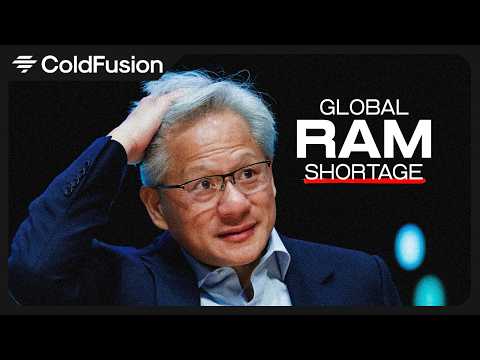
Source material: The RAM Crisis Keeps Getting Worse
Key insights
- The supply shortage of RAM is evident, with consumers facing higher prices and delayed product releases. This situation is driven by the growing demand for RAM in AI data centers, which are critical for modern computing
- OpenAI has secured about 40% of the global high bandwidth RAM, shifting production priorities away from consumer devices. This demand affects a wide range of electronics, including phones and laptops
- High bandwidth memory (HBM) is essential for AI training hardware and shares the same wafer fabrication process as consumer RAM. The allocation of wafers to HBM reduces the availability of consumer-grade RAM, worsening supply issues
- Nvidias CEO met with Samsung memory executives to secure RAM supplies, emphasizing the competitive landscape favoring AI data centers. Samsung now profits more from RAM sales to data centers than from its phone sales, indicating a significant market shift
- As AI demand rises, manufacturers are prioritizing server-grade memory for AI operations. This focus raises concerns about the availability of consumer RAM, as data center needs take precedence
- The supply shortage of RAM is impacting consumer electronics due to increased demand from AI data centers. OpenAI's acquisition of 40% of global high bandwidth RAM is shifting production priorities away from consumer devices.
Perspectives
Analysis of the RAM supply crisis driven by AI demand.
Impact of AI on RAM Supply
- Highlights the critical role of RAM in modern computing and AI
- Warns of rising prices and limited availability of consumer electronics
- Claims that AI data centers are monopolizing RAM production
- Argues that the RAM supply crisis is driven by a few dominant manufacturers
- Proposes that the shift in RAM production priorities threatens consumer access
- Questions the sustainability of current AI demand and its impact on RAM supply
Concerns Over Market Stability
- Questions the long-term viability of AI demand and its implications for RAM supply
- Highlights the risk of a market bubble in AI technologies
- Argues that reliance on a few companies creates a fragile supply chain
- Denies the ability of new entrants to quickly alleviate supply issues
- Rejects the assumption that current contracts will provide stability in the market
- Accuses the industry of being unprepared for potential demand fluctuations
Neutral / Shared
- Notes that the RAM supply crisis is affecting various consumer electronics
- Mentions the significant price increases for RAM and related components
- Observes that major tech companies are scrambling for RAM allocations
- Highlights the potential for reduced production of consumer electronics
Metrics
price_increase
one single 256GB RAM kit can now cost more than a flagship GPU
Current pricing of RAM kits
This illustrates the escalating costs consumers face in the tech market.
One single 256GB RAM kit can now cost more than a flagship GPU
market_control
93%
global supply of high-quality RAM
High concentration increases vulnerability to supply disruptions.
Around 93% of those chips come from just three companies.
consumer_stock
sell out by early 2026
availability of leftover consumer RAM stock
Indicates a looming shortage for consumer electronics.
The leftover consumer stock was expected to sell out by early 2026.
premium
230%
Apple's memory costs for iPhone 17 Pro models
This premium indicates severe supply chain pressures affecting consumer electronics.
Apple is already deep in it as well. They're reporting paying a 230% premium for the 12GB LPDDR5X memory used in its iPhone 17 Pro models.
memory_capacity
up to 864 gigabytes GB
memory capacity per rack for AI models
This highlights the immense resource requirements for modern AI applications.
Each rack carries enormous amounts of memory. Up to 864 gigabytes, and that's because modern AI models demanded.
production_timeline
two to four years
timeframe for chip obsolescence
This raises concerns about the sustainability of current investments in memory technology.
What happens in two to four years when the very chips that have ruined the global RAM supply are hopelessly outdated for their original purpose?
contract_duration
well into 2026 year
contract commitments for memory supply
This indicates that current supply issues may persist despite new entrants in the market.
SK Heinex has reportedly sold through much of its production well into 2026.
subscription_discount
20%
annual premium subscription discount
This discount may incentivize users to commit to a paid subscription.
Brilliant's also offering our viewers 20% of an annual premium subscription
Key entities
Timeline highlights
00:00–05:00
The supply shortage of RAM is impacting consumer electronics due to increased demand from AI data centers. OpenAI's acquisition of 40% of global high bandwidth RAM is shifting production priorities away from consumer devices.
- The supply shortage of RAM is evident, with consumers facing higher prices and delayed product releases. This situation is driven by the growing demand for RAM in AI data centers, which are critical for modern computing
- OpenAI has secured about 40% of the global high bandwidth RAM, shifting production priorities away from consumer devices. This demand affects a wide range of electronics, including phones and laptops
- High bandwidth memory (HBM) is essential for AI training hardware and shares the same wafer fabrication process as consumer RAM. The allocation of wafers to HBM reduces the availability of consumer-grade RAM, worsening supply issues
- Nvidias CEO met with Samsung memory executives to secure RAM supplies, emphasizing the competitive landscape favoring AI data centers. Samsung now profits more from RAM sales to data centers than from its phone sales, indicating a significant market shift
- As AI demand rises, manufacturers are prioritizing server-grade memory for AI operations. This focus raises concerns about the availability of consumer RAM, as data center needs take precedence
05:00–10:00
A few companies, including Samsung, SK Hynex, and Micron, dominate the global supply of high-quality RAM, controlling 93% of the market. Micron's exit from the consumer RAM sector to focus on enterprise and AI buyers raises concerns about future consumer RAM availability.
- Only a few companies, including Samsung, SK Hynex, and Micron, control 93% of the global supply of high-quality RAM for AI data centers. This concentration creates a fragile system where a single disruption can have widespread effects
- Microns exit from the consumer RAM market to focus on enterprise and AI buyers has significant implications for consumer RAM availability. Predictions indicate that leftover consumer stock may sell out by early 2026
- Tech giants like Google and Microsoft are scrambling to secure RAM allocations, with executives labeled as DRAM beggars in their negotiations with suppliers. Googles attempts to secure high-bandwidth memory for its TPUs faced blunt refusals due to supply constraints
- Memory manufacturers cannot simply increase production to meet rising demand, as their facilities are already operating at full capacity. Adjusting production levels is delicate and can lead to significant delays
- Building new fabrication plants takes at least two years before they can produce chips, posing a risk for companies investing billions based on uncertain future demand. This uncertainty could lead to a bubble in the AI market
- Sam Altman, CEO of OpenAI, has acknowledged the possibility that the current AI frenzy may be a bubble. His comments reflect cautious sentiment among industry leaders regarding the sustainability of demand for AI technologies
10:00–15:00
The current RAM supply crisis is exacerbated by increased demand from AI technologies, leading to significant price increases and supply limitations for consumer electronics. Industry leaders express caution, fearing that the AI boom may be a bubble, which could result in financial losses if demand declines unexpectedly.
- Sam Altman expressed concerns that the current AI boom may be a bubble, suggesting that while AI is significant, investors are overly excited, which could lead to financial losses for some. This sentiment reflects cautious views among industry leaders regarding the sustainability of demand for AI technologies
- The memory industry is hesitant to increase production capacity due to past experiences where a surge in demand led to oversupply and price collapses. Executives are now facing overwhelming requests for memory supplies, with potential risks to business operations if demands are not met
- Japanese electronic retailers have started limiting hard drive purchases, while Apple is paying a 230% premium for memory used in its iPhone 17 Pro models. This indicates severe supply chain pressures affecting consumer electronics
- PC manufacturers like Lenovo and HP are scrambling for memory supplies, with predictions that the RAM shortage could last until 2027. This situation may lead to price increases and potential declines in the PC market
15:00–20:00
The demand for memory in modern AI models is leading to a significant allocation of global memory supply to data centers, impacting consumer hardware availability. Concerns arise regarding the longevity of these memory chips, which may become outdated within two to four years.
- Modern AI models require enormous amounts of memory, with each rack carrying up to 864 gigabytes. This demand is causing a significant portion of the global memory supply to be allocated to data centers, leaving little for consumer hardware. The data center build-out presents a problem as the chips currently in high demand may become outdated in two to four years
20:00–25:00
Brilliant provides a learning platform focused on interactive problem-solving rather than traditional grading. Users can try it for free for 30 days and receive a 20% discount on an annual premium subscription.
- Brilliant offers a unique learning platform that emphasizes understanding through interactive problem-solving. Users can access it for free for 30 days, with a 20% discount on an annual premium subscription for unlimited access